
What's the Difference Between an MPI-Certified Paint & Coatings Inspector and an Engineer?
October 23, 2026 at 6:25 PM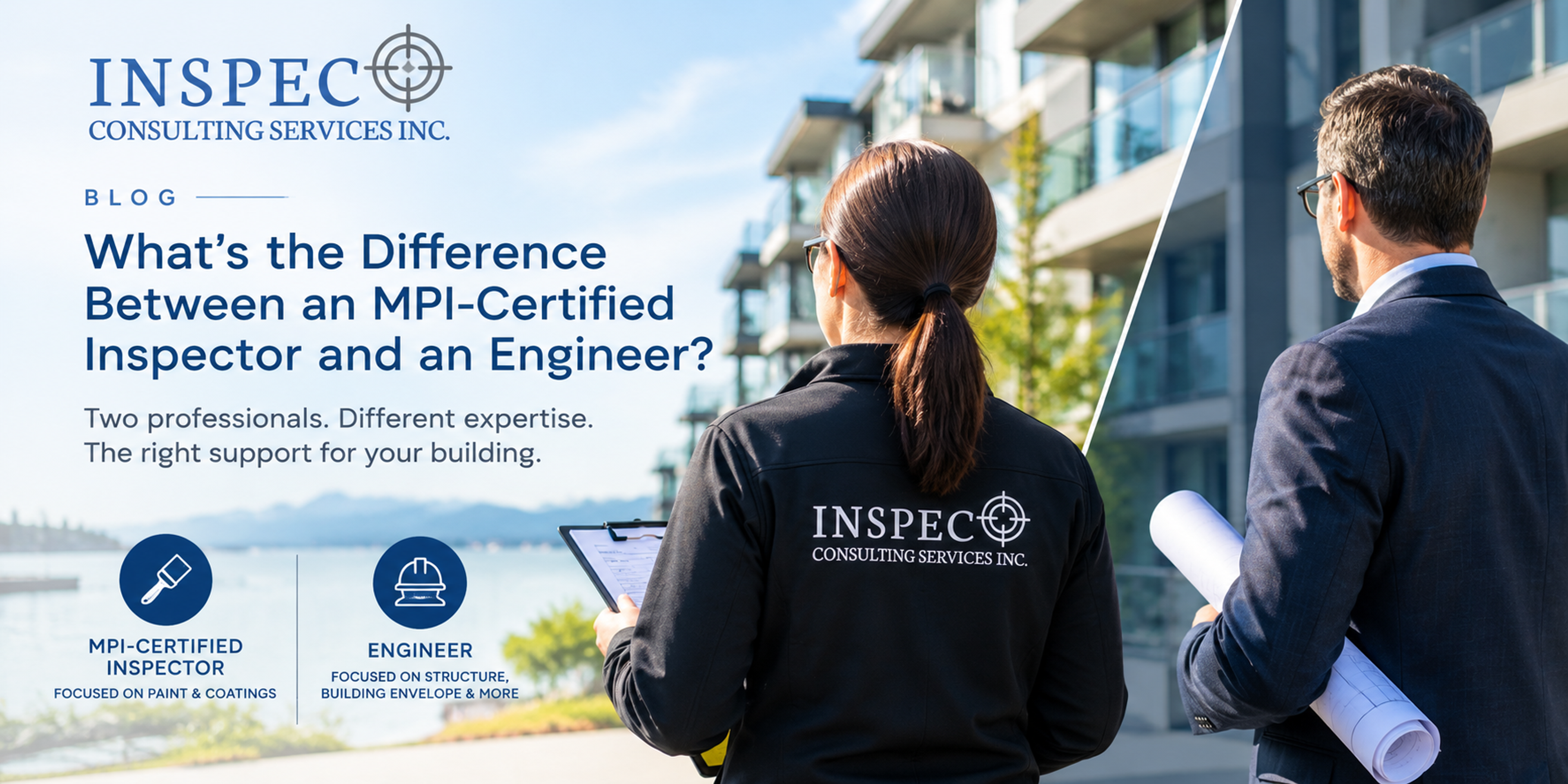
When planning a building maintenance or repainting project, property managers and strata councils often rely on engineers and other building professionals to help assess the condition of their properties. However, one important question is often overlooked: Who is responsible for evaluating the condition and quality of the building's paint and coating systems?
While engineers and MPI-certified architectural coatings inspectors both provide valuable expertise, their areas of specialization and the services they offer are different.
Understanding these differences can help property managers and strata councils make informed decisions, plan maintenance effectively, and ensure their buildings receive the appropriate professional assessments.
What Is an MPI-Certified Architectural Coatings Inspector?
An MPI-Certified Architectural Coatings Inspector specializes in paint and coating systems, including the materials, surface preparation, application methods, and workmanship required to achieve a successful and durable finish.
The Master Painters Institute (MPI) provides industry training, technical standards, and certification for professionals working in architectural coatings. Becoming an MPI-Certified Architectural Coatings Inspector involves completing the required training, meeting experience criteria, and successfully completing the inspector appraisal process.
These inspectors focus on quality assurance for painting and coating projects, helping property owners understand the condition of coated surfaces and whether painting work meets the applicable project specifications and industry standards.
What Does an MPI-Certified Inspector Do?
An MPI-certified inspector can support a building's maintenance and repainting needs in several ways.
1. Assess Existing Paint and Coating Conditions
Before a repainting project begins, an inspector can assess existing painted and coated surfaces to identify visible deterioration, coating failures, maintenance concerns, and areas requiring further investigation.
This information helps property managers understand the current condition of their building and make more informed decisions about maintenance and repainting.
2. Develop Painting Specifications
A painting specification outlines the required scope of work, surface preparation procedures, coating products, and application requirements for a project.
A project-specific specification helps establish clear expectations for painting contractors and provides a consistent basis for evaluating bids and workmanship.
3. Inspect Surface Preparation and Application
A successful painting project involves much more than applying a fresh coat of paint.
An MPI-certified inspector can review surface preparation, verify specified products, assess application practices, and document observations at appropriate stages of the project. Depending on the project requirements, inspections may include cleaning, preparation, priming, and coating application.
4. Provide Independent Quality Assurance
Third-party inspections provide property owners and strata councils with an independent perspective on the painting work being completed.
Through site inspections, photographs, and written reports, an inspector can document observed conditions, identify deficiencies, and help the project team address concerns before completion.
5. Help Investigate Coating Failures
When paint peels, blisters, cracks, or fails prematurely, an inspector can review the existing coating system, available project documentation, and observable conditions to help identify potential contributing factors.
Where failures involve underlying structural or building-envelope concerns, additional investigation by an appropriately qualified professional may be necessary.
What Does an Engineer Do?
Engineering is a broad profession with several areas of specialization. Depending on their discipline and experience, engineers may assess structural systems, building-envelope performance, building materials, drainage, and other technical aspects of a building.
In British Columbia, professional engineering is a regulated profession, and engineers must be qualified to practise within their areas of competence.
For strata properties and commercial buildings, an engineer may be engaged to investigate concerns such as:
- Structural deterioration or damage.
- Water ingress and building-envelope performance.
- Concrete deterioration and other material-related concerns.
- Balcony, deck, or building component failures.
- Building deficiencies requiring engineering analysis.
- Repair recommendations involving engineering design or judgment.
The specific scope of an engineering assessment depends on the professional's discipline, qualifications, and the requirements of the project.
Engineers may also provide recommendations, prepare technical reports, develop repair designs, and support the implementation of remedial work.
The key distinction is that engineering assessments address the technical questions within the engineer's area of practice, while an MPI-certified coatings inspector specializes in the paint and coating system itself.
An engineer may assess deterioration in a building component, for example, while a coatings inspector evaluates the condition of the existing coating, appropriate preparation requirements, and the painting work needed to protect the surface.
These responsibilities can overlap, and the appropriate professional depends on the problem being investigated.
Why Does This Matter for Strata Councils and Property Managers?
When a building requires maintenance or repainting, it can be difficult to know which professional to contact first.
A property may have visible paint deterioration, failing sealants, exposed wood, or deteriorating coatings on metal and concrete surfaces. These conditions can raise questions about the building's overall condition and whether repairs are needed before repainting begins.
An engineer may be appropriate when there are concerns about structural integrity, water ingress, or building-envelope performance. An MPI-certified coatings inspector can help assess the paint and coating conditions, identify preparation and maintenance requirements, and establish the scope of work needed for a repainting project.
Depending on the condition of the property, both assessments may be beneficial.
Consider These Examples
Example 1: A Strata Building Needs Repainting
The existing paint is fading, peeling in some areas, and beginning to fail around window trim and fascia boards.
An MPI-certified coatings inspector can assess the existing coating conditions, identify areas requiring attention, and help develop an appropriate painting specification.
If the inspection also identifies evidence of wood deterioration, water ingress, or another underlying building concern, further investigation by the appropriate professional may be recommended before painting proceeds.
Example 2: A Building Has Water Ingress Concerns
Residents report water entering their units around windows, and deterioration is visible on nearby painted surfaces.
An MPI-certified coatings inspector can document the condition of the paint and related coated surfaces. However, a coating inspection alone cannot establish the source of water ingress or confirm that the building envelope is performing properly.
An engineer or other qualified building-envelope professional may be needed to investigate the source of the problem and recommend appropriate repairs.
Once the underlying concerns have been addressed, an MPI-certified coatings inspector can help establish the requirements for the painting work.
Example 3: A Painting Project Is Already Underway
A painting contractor has begun work on a strata building, but concerns arise about surface preparation, coating application, or whether the specified products are being used.
An MPI-certified coatings inspector can conduct project-specific inspections, document observed deficiencies, and assess the work against the applicable specifications.
This provides the property manager and strata council with independent information to help address concerns while the project is underway.
What Is IPASS, and How Can It Help?
At Inspec Consulting Services, we recognize that property managers and strata councils need reliable information to make maintenance decisions before committing to a major repainting project.
That's why we offer IPASS — the Inspec Paint Assessment Support Service.
IPASS is a proactive assessment of a building's paintable and coated surfaces, designed to help property managers and strata councils better understand existing conditions and plan for future maintenance.
An IPASS assessment can include:
- Assessment of paintable and coated substrates.
- Identification and documentation of visible coating deterioration and maintenance concerns.
- Photographic documentation of observed conditions.
- Recommendations for painting-related maintenance.
- Suggested maintenance timelines to support planning and budgeting.
Following the onsite assessment, Inspec provides a detailed written report with photographs, findings, and recommendations.
This information can help strata councils prepare for upcoming meetings, evaluate maintenance priorities, and make more informed decisions about future repainting budgets.
Rather than waiting until paint is peeling extensively, wood is exposed, or deterioration has progressed, IPASS helps you take a proactive approach to understanding your building's coating condition.
Why Choose an Independent Third-Party Paint Inspector?
A painting contractor is responsible for carrying out the work, while an independent third-party inspector provides a separate perspective on the condition of the coatings and the quality of the work being completed.
For property managers and strata councils, this independent oversight can provide several benefits:
- Clearer expectations: Project-specific specifications establish requirements for preparation, products, and application.
- Independent documentation: Site observations, photographs, and reports provide a record of the work inspected.
- Early identification of concerns: Issues may be identified during the project, allowing the team to address them before completion where possible.
- Improved communication: Written findings help property managers, strata councils, and contractors understand and discuss project concerns.
- Better maintenance planning: Assessments help inform decisions about painting-related maintenance and future budgets.
The objective is to help protect the building's painted and coated surfaces while supporting a more organized, informed, and accountable maintenance process.
The Bottom Line: The Right Expertise for the Right Job
Engineers and MPI-certified architectural coatings inspectors bring different areas of expertise to building maintenance.
When structural integrity, water ingress, or building-envelope performance is in question, an appropriately qualified engineer or other building professional may be required.
When the focus is the condition of paint and coating systems, painting specifications, surface preparation, application quality, and independent coating inspections, an MPI-certified coatings inspector can provide specialized support.
In many cases, these professionals can work together to help property managers and strata councils make informed decisions and protect their building investments.
At Inspec Consulting Services, we help property managers and strata councils understand their building's paint and coating conditions, plan maintenance, and support painting projects from initial assessment through to completion.
Whether you are preparing for a future repaint, reviewing a building's current condition, or looking for independent quality assurance during an active project, we can help you determine the appropriate next step.
Ready to Learn More?
Contact Inspec Consulting Services to learn how our IPASS assessments, painting specifications, and third-party inspection services can support your next maintenance or repainting project.
Serving Metro Vancouver and the Lower Mainland, including Vancouver, Burnaby, Richmond, Surrey, Delta, White Rock, Langley, Coquitlam, Port Coquitlam, Port Moody, and surrounding communities.
Protect Your Building Investment
Contact Us